Wednesday, November 25, 2009

Evolution of IUPUI's website 11-25-09

This entry is about the evolution of the main website for Indiana University-Purdue University-Indianapolis(IUPUI). As for evolution of websites, I have searched through archive.org and its Wayback Machine to study old designs.

IUPUI 1997


The earliest known design of the IUPUI website used an image map that housed the main links of the website. Other than that, there's nothing note-worthy, as is the case for most websites back in 1997.
IUPUI 2009

By 2009, the website had evolved beyond what was first shown in 1997. There are more topical links, a search feature, and added colors. The colors in this main page are crimson/red(one of the colors also used in the logo) and dark gray.

Note: I would have shown the 2008 design of the IUPUI page, but I wasn't able to find a version that did not have broken Jpeg images or lost CSS.

Monday, November 23, 2009

Evolution of MSN.com 11-24-09

I have recently searched through Archive.org to see how certain websites have evolved. This entry is about the Microsoft Network website, better known as MSN.com.

MSN.com 1996


Note: I had cropped this image slightly to save space, because there was nothing to the right except extra space.

At its beginnings, MSN had a simple design with ad hoc links inserted within. All websites and pages were simple back in the mid-1990s, and MSN was no different.


MSN.com 2008


Twelve years later, MSN has since evolved into a more complex website with more topically-organized links and more services, such as news, video and weather.

MSN.com 2009

In 2009, MSN.com has gained more color in its design. There is a wealth of information on the site, which can create a poverty of attention(Herbert Simon, "Attention Economy"). It seems to suffer from the same problem that Yahoo!(see Yahoo! post) had: starting off simple, then becoming more complex. There is a wealth of information on the site, which can create a poverty of attention("Attention Economy"). My belief is that "less can be more". Google(see Google post) has less on its main page, but its focus was the search engine itself, which can provide millions of results at a time.

Works Cited

"Attention economy -." Wikipedia, the free encyclopedia. Web. 25 Nov. 2009. [http://en.wikipedia.org/wiki/Attention_economy].

Evolution of Yahoo! 11-24-09

I have recently searched through Archive.org to see how certain websites have evolved. This entry is about Yahoo!

Yahoo! 1996


This is the first version of Yahoo! from 1996. Yahoo!, as a search engine, predated Google by 2 years. As Google was simple in its design back in 1998, Yahoo! was also simple and had its main topics in alphabetical order, just like the Harvard University Website from 1997(see Evolution of Harvard entry).
Yahoo! 2008

Twelve years after its first design, Yahoo hadn't changed much as far as simplicity went. They now offered more services than its first design as well. This design is also more compact than the original 1996 design.
Yahoo! 2009

Sadly, Yahoo! got rid of simplicity in its most recent design and opted to put more information in its home page. They have added a list of "popular searches" to their site and offered customizability, but a new person might get lost in this website and not know what to do.

Evolution of Google 11-23-09

I have recently searched through archive.org in its Internet Archive Wayback Machine to uncover the past designs of the famous search engine Google.

Google 1998 version 1


Google 1998 version 2

According to the web address archived by Archive.org, Google was initially a project of Stanford University back in 1998. It doesn't seem too different from today's design of the search engine, other than the exclamation point in the logo and the simpler functionality back then.

Google 2008


A decade later, Google has acquired a different, more slender font for its logo, and it has a simpler design and an additional task bar with links to different services, including its email service named Gmail. (You'll have to excuse the broken image. This was archived.)

Google 2009


Not much has changed a year later. Google still maintains the same design and features from its 2008 design. (Also the email address is censored)

Evolution of Harvard University's website 11-23-09

I have started searching for possible design journal ideas on archive.org, because its Internet Wayback Machine can show how certain websites have evolved over the years from 1996 to now.

The first entry of the series will be on Harvard University's website.

Harvard's website 1997


At its beginnings, the Harvard website was simple and only had the links categorized in alphabetical order. It may be organized, but it wasn't as organized as it could be. It seemed that back then, they didn't think to condense everything into general topics.

Harvard's website 2008


Eleven years later, this version of the Harvard website is more condensed and slightly more complex in its design. The Harvard logo and its official color, Crimson, are now visible on the website, along with other photos.

Harvard's website 2009


In 2009, the website was redesigned, and it is even more compact than the previous design. To me, this is for the best, because it makes navigation around the site feel the smoothest of the three. It also uses the gestalt principles of organization, including proximity for the "Harvard and the World" links and the links in the banner.

Saturday, November 21, 2009

Ball vs. Optical Mouse 11-21-09

Ball Mouse


Optical Mouse


This entry will be about two different types of computer mice. One is movable with a rubber ball, while the other is moved by laser sensor. I actually like the laser mouse more than the ball mouse, because the ball mouse tends to get dirty after a while. The dirt causes the rubber ball to slow down or even stop moving. You would have to take out the rubber ball to clean it, but that increases the chances of losing the mouse's ball, thus rendering the mouse useless and forcing you to buy another mouse.

The optical mouse is more economic and less susceptible to the "missing parts" problem. You need only have the mouse on a firm surface and move your mouse around. Unless your optical laser or the mouse's wire is damaged, then there is no problem.

Wednesday, November 18, 2009

Mario Bros. and Wario Bros. 11-18-09

This entry will be about the Mario Bros.(Mario and Luigi) and their arch-rivals, the Wario Bros.(Wario and Waluigi) from Nintendo.

Mario and Luigi


Mario and Luigi wear the colors red and green respectively. Since Mario wears red, a warm color, this means he is more active and energetic. Luigi wears green, which is a cool color, so which means he doesn't tend to be as energetic and confident as Mario is. Red and green complement each other, so the two brothers have to be opposites of each other, especially in height. Mario is shorter and fatter, and Luigi is taller and thinner.

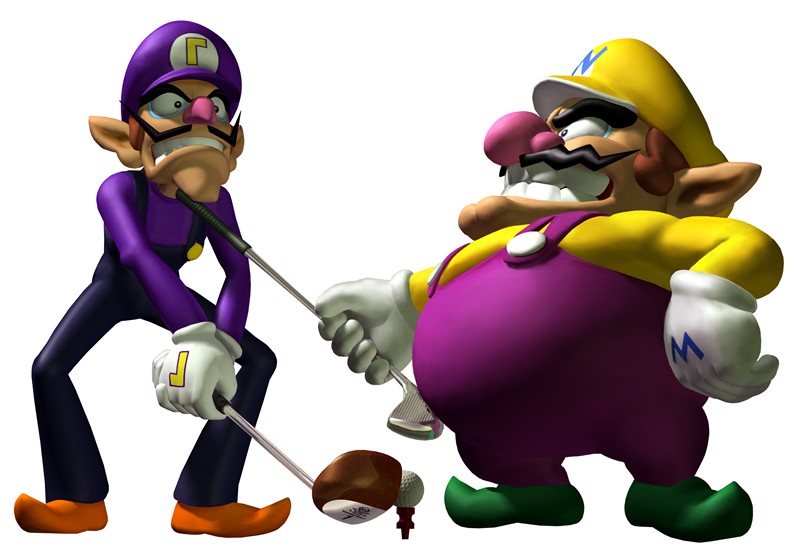
Wario and Waluigi


The Wario Bros. are the sneaky and underhanded versions of the Mario Bros. As their "evil" dopplegangers, they maintain the Marios' main traits. Wario and Waluigi wear complementary colors(Yellow=Wario; Purple=Waluigi). Waluigi, like Luigi, is the thinner and taller brother. Wario, like Mario, is the fatter and shorter brother.

The "complementary" pair was actually first popularized by the comedians of the 1930s-1940s such as Laurel and Hardy and Abbott and Costello(shown below).

Laurel and Hardy


Abbott and Costello


The "complementary" pair was also popular with movie critics Roger Ebert and the late Gene Siskel(shown below).